Living Room Wall Decor: The Complete Guide to Styling Your Walls with Confidence
Introduction
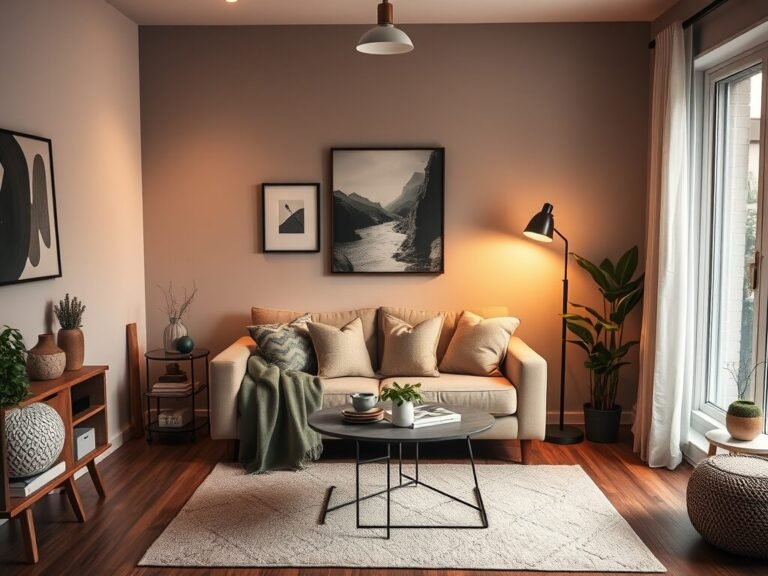
Walk into any beautifully designed living room and the first thing you notice — before the furniture, before the lighting, before anything else — is the walls. Living room wall decor sets the tone for the entire space. It communicates your aesthetic, your personality, and your sense of style before a single word is spoken. A living room with thoughtfully decorated walls feels complete, intentional, and genuinely designed. A living room with bare or poorly decorated walls — no matter how expensive the furniture — always feels like something is missing.
And yet, wall decor is where most people get stuck. The scale is intimidating. The choices are overwhelming. The fear of getting it wrong — of drilling holes in the wrong place, of choosing art that does not work, of spending money on something that ends up looking bad — keeps people paralyzed, living with blank walls for months or years while they wait for confidence that never quite arrives on its own.
This guide is designed to change that. Whether you are starting from a completely blank wall or rethinking a space that has never quite come together, you will find everything you need here: ideas, strategies, styling principles, and practical guidance on creating living room wall decor that looks genuinely beautiful and completely right for your space.
Why Living Room Wall Decor Matters More Than You Think
The walls of a living room make up the majority of the room’s visible surface area. In a typical 12 by 14 foot living room, the wall surface dwarfs the floor, the ceiling, and the furniture combined. Leaving that surface bare is the decorating equivalent of buying a beautiful outfit and wearing it with no accessories — technically fine, but noticeably incomplete.
Living room wall decor does several things simultaneously that nothing else in the room can do:
It creates focal points that anchor the furniture arrangement and give the eye somewhere to travel. It adds color, texture, and pattern to surfaces that would otherwise be flat and featureless. It introduces personality and narrative — the art you choose, the objects you display, the collections you arrange all tell the story of who you are and what you care about. And it makes the room feel finished in a way that the most carefully chosen sofa or the most perfectly placed rug simply cannot achieve on its own.
Understanding this is the first step toward approaching living room wall decor with genuine confidence rather than anxious indecision.
Types of Living Room Wall Decor
Before exploring specific ideas and styling strategies, it helps to understand the main categories of living room wall decor available to you. Most beautifully designed living rooms use a combination of several types rather than committing exclusively to one.
Framed Art and Prints
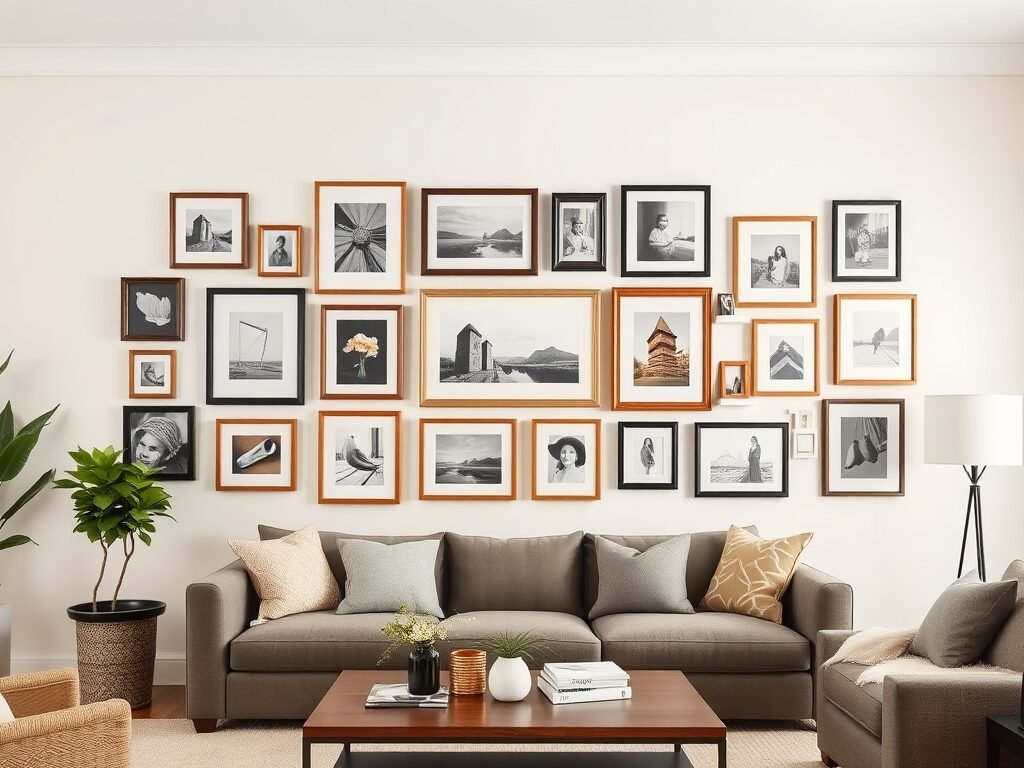
Framed art is the most traditional form of living room wall decor, and it remains one of the most effective. The options span an enormous range — from original paintings and limited edition prints to affordable poster art, free printables, and thrifted finds. What matters is not the price or the provenance but the choice: art that you genuinely love, displayed in a way that works with the scale and proportions of the room.
Gallery Walls
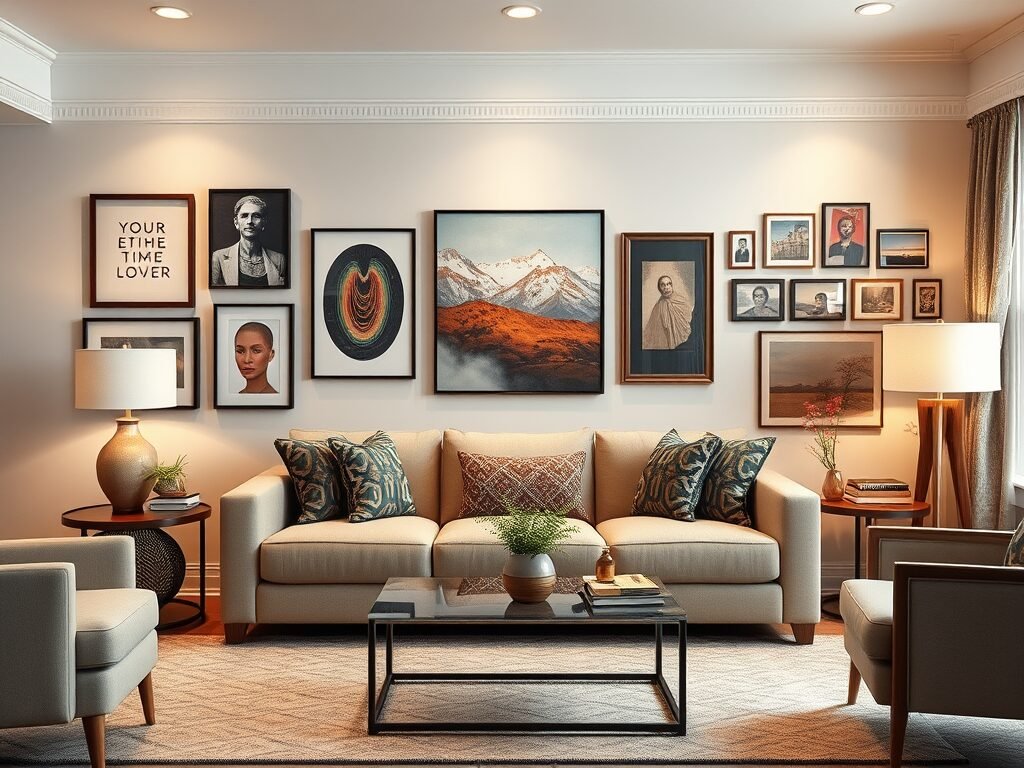
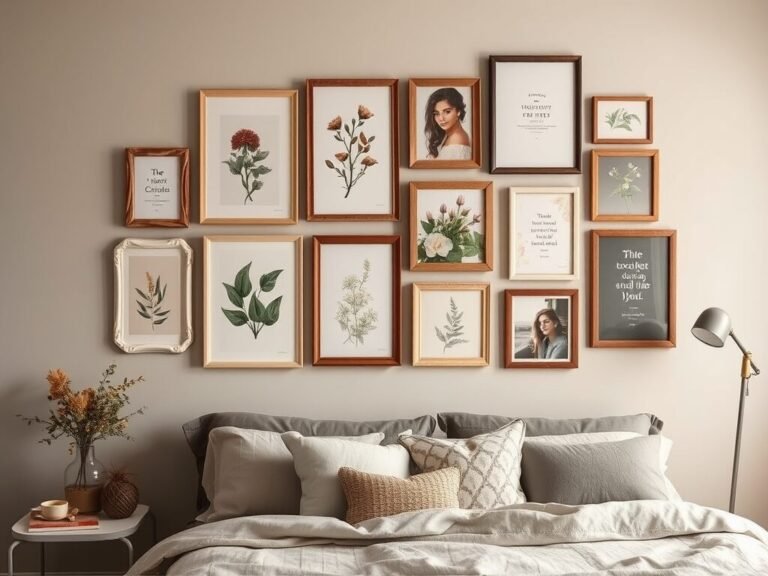
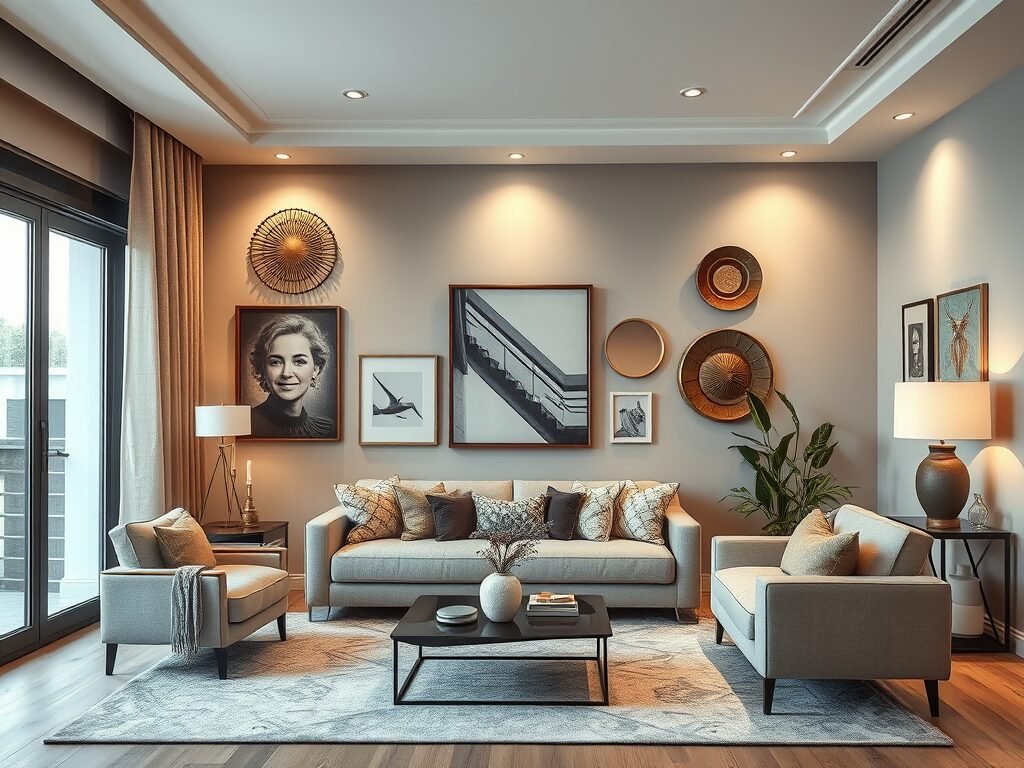
A gallery wall is an arrangement of multiple framed pieces — art, photographs, prints, mirrors — displayed as a single cohesive composition on one wall. Done well, a gallery wall is one of the most impactful and personal forms of living room wall decor available. It fills large wall areas with visual interest, accommodates pieces of different sizes and styles, and creates a layered, collected look that single pieces cannot achieve.
Mirrors
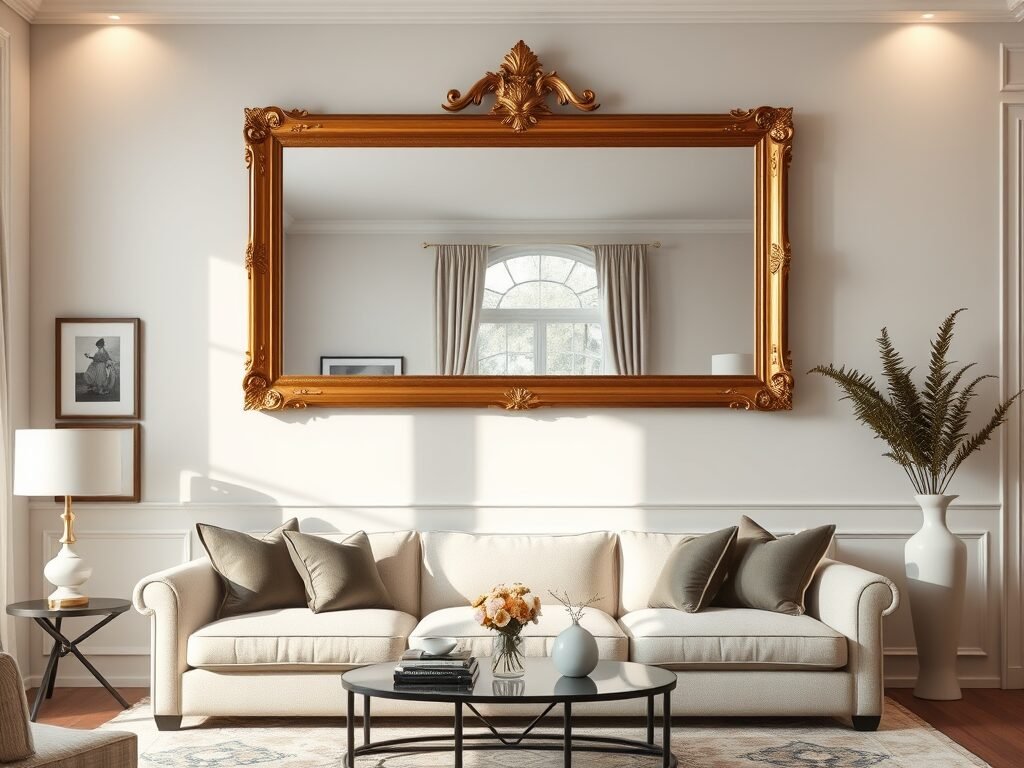
Mirrors serve double duty as living room wall decor. They are decorative objects in their own right — available in a huge range of shapes, sizes, and frame styles — while also reflecting light and visually expanding the space. A large statement mirror above a sofa or console is one of the most classic and reliably effective living room wall decor choices.
Shelving and Three-Dimensional Displays
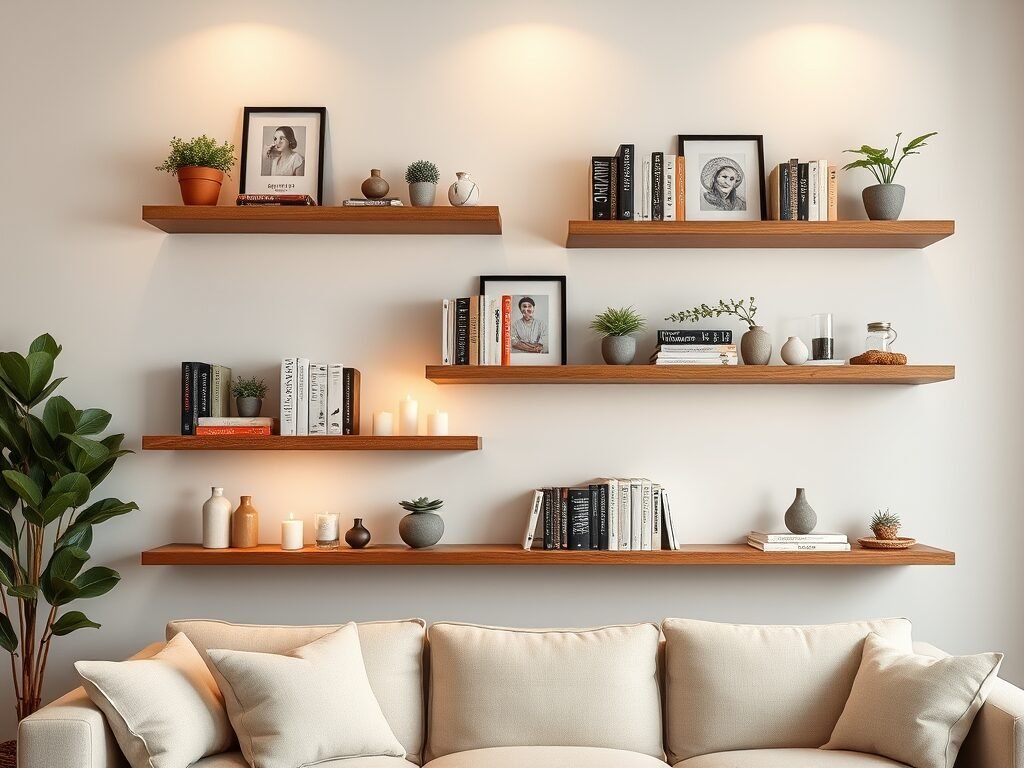
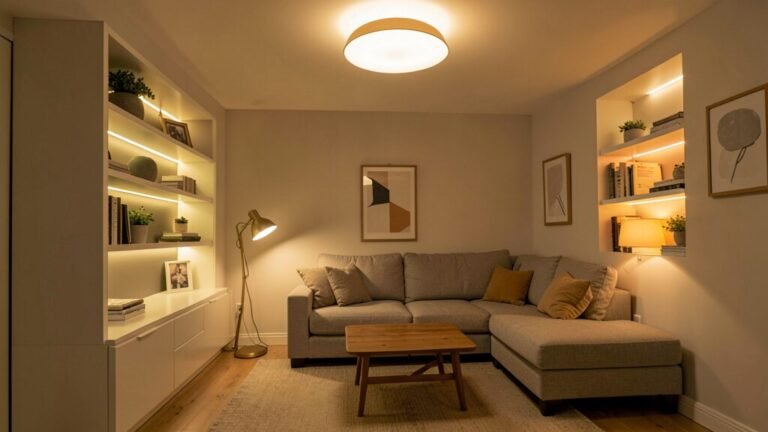
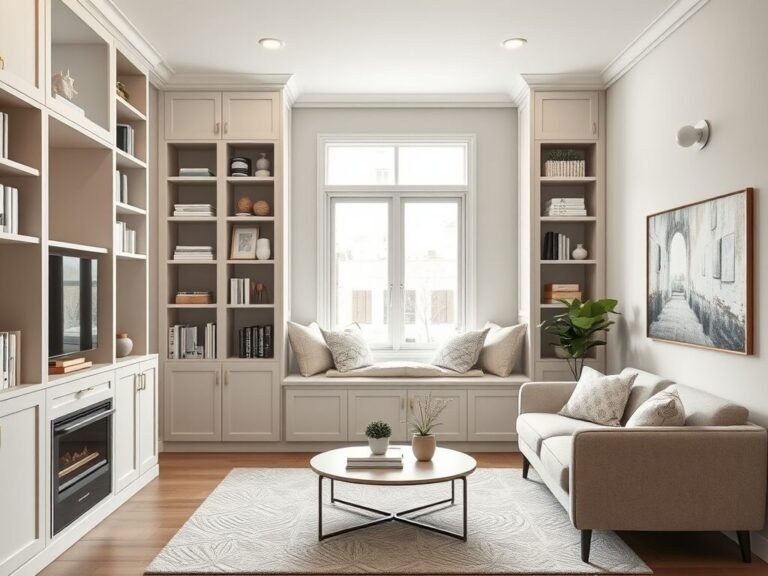
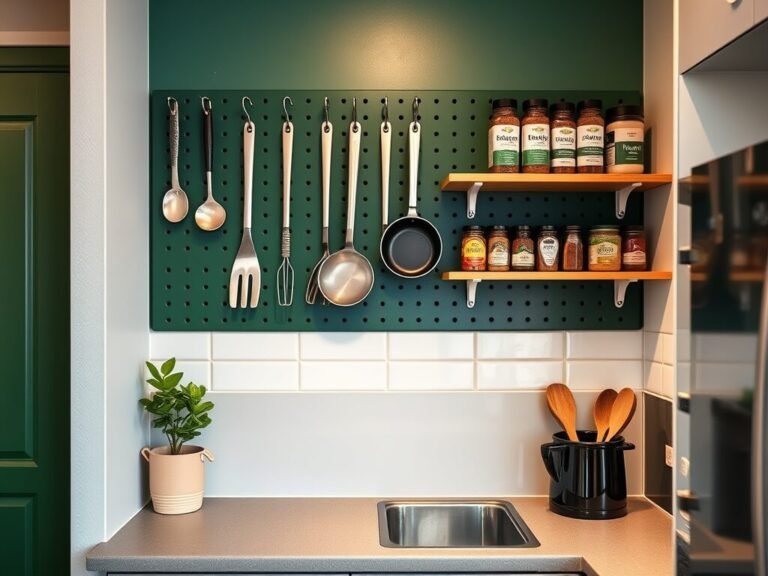
Floating shelves, wall-mounted brackets, and ledge shelves transform blank walls into functional display surfaces. Styled with a curated mix of books, plants, candles, and decorative objects, they add depth, dimension, and personality to a living room wall in a way that flat artwork alone cannot.
Textile Wall Hangings
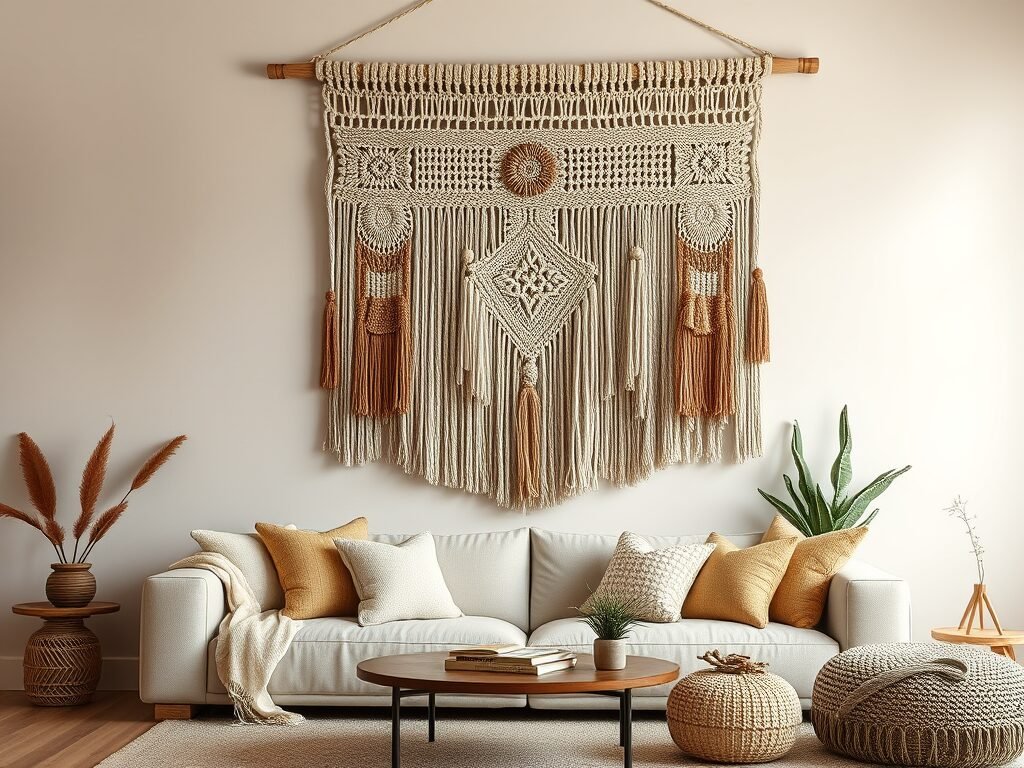
Macramé wall hangings, woven tapestries, fabric panels, and decorative rugs hung on the wall all introduce warmth, texture, and artisan character that printed and framed art rarely achieves. Textile wall decor is particularly effective in living rooms that feel cold, echoey, or acoustically harsh — the soft material absorbs sound while adding visual softness.
Architectural and Structural Wall Details
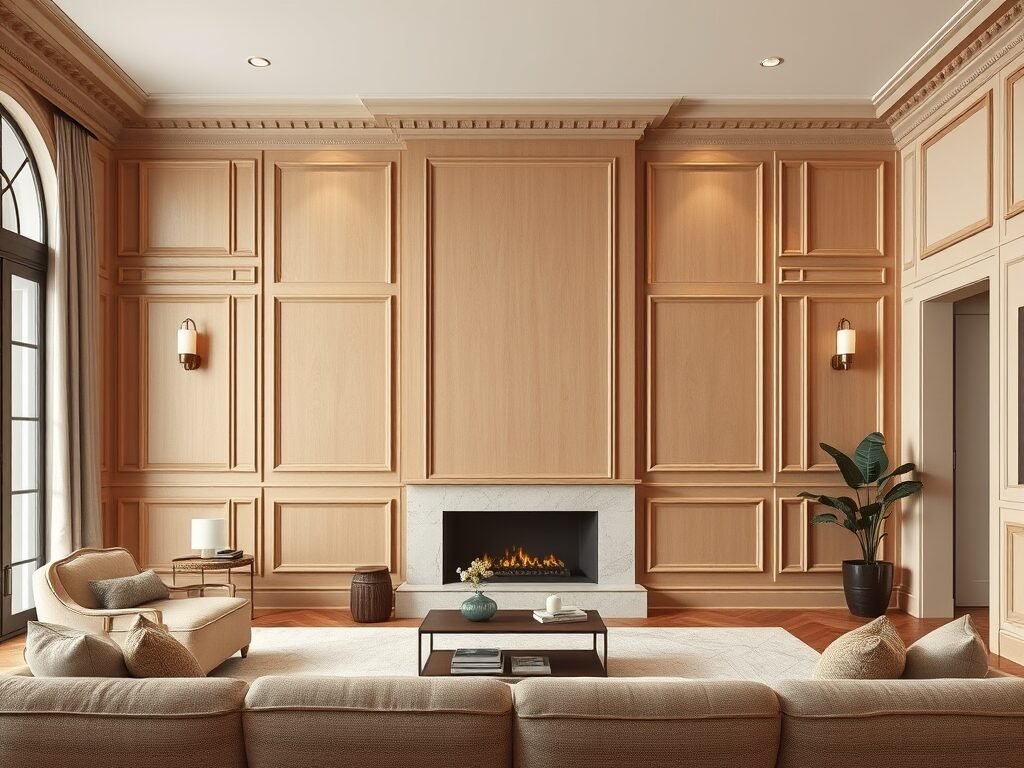
Wood paneling, shiplap, board and batten, decorative molding panels, brick-effect tiles, and painted geometric patterns all fall into this category. These treatments add architectural interest and character to flat, featureless walls and create a sense of permanence and quality that furniture and accessories cannot replicate.
The Best Living Room Wall Decor Ideas
1. Create a Curated Gallery Wall
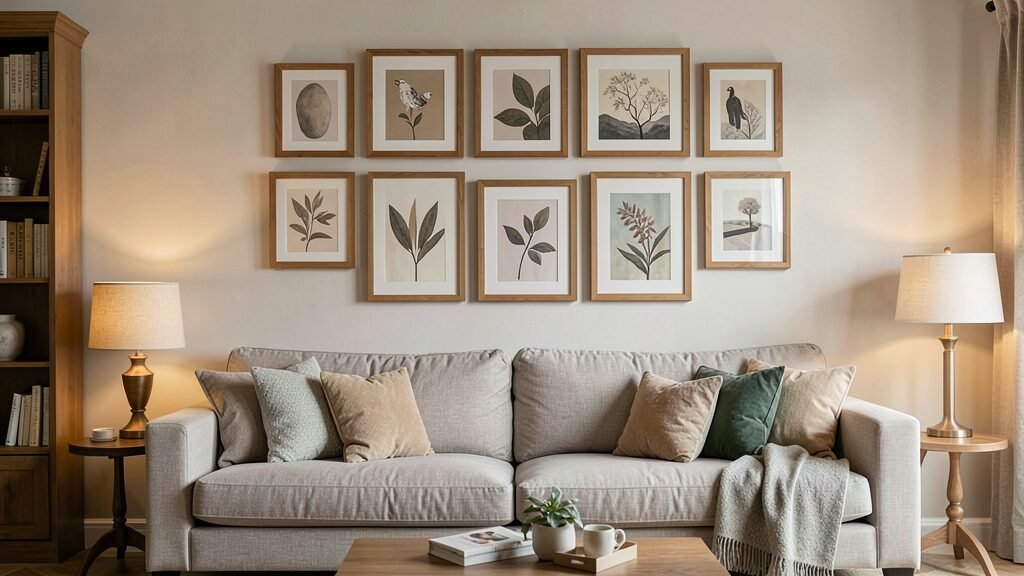
The gallery wall is perhaps the single most versatile living room wall decor solution available because it works in virtually every style — from maximalist bohemian to clean Scandinavian minimalism — and can be built gradually over time rather than all at once.
The key to a gallery wall that looks designed rather than chaotic is curation and consistency. Choose a unifying thread — a consistent frame color or finish, a shared color palette in the artwork, a consistent style or theme — and let that thread run through every piece in the arrangement. Lay all pieces out on the floor and photograph the arrangement before committing to the wall. Plan spacing carefully: two to three inches between frames creates a cohesive, intentional look.
For a living room gallery wall, the sofa wall is almost always the right starting point. Center the arrangement above the sofa, keeping the bottom of the lowest frame approximately eight to ten inches above the sofa back.
2. Hang a Large Statement Mirror
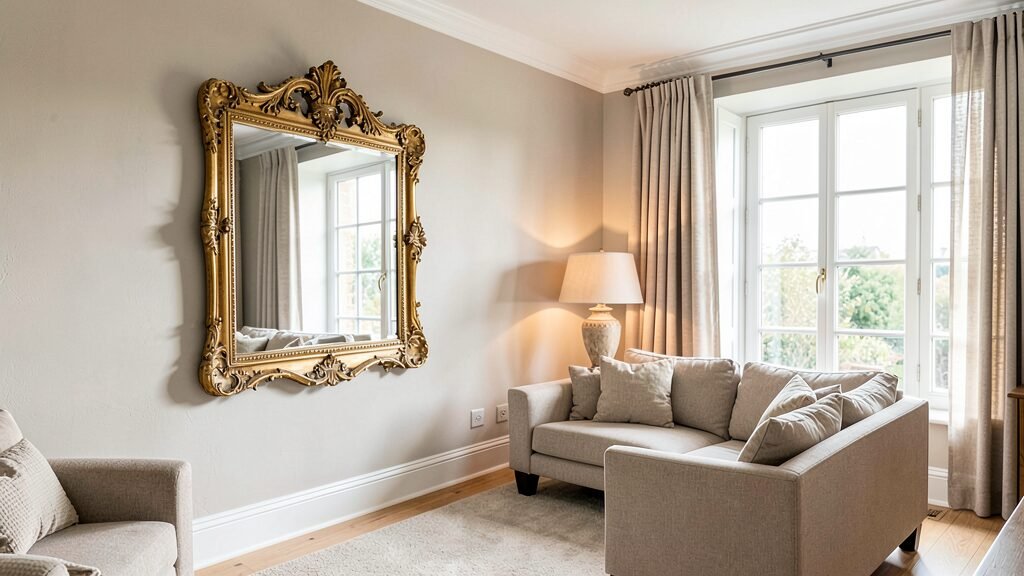
A large mirror is one of the most reliably effective pieces of living room wall decor — particularly in smaller living rooms or rooms that lack natural light. The reflective surface bounces light around the space, makes the room feel larger and brighter, and creates a sense of depth that flat artwork cannot achieve.
For maximum impact, choose a mirror that is genuinely large — at least 24 inches wide for most living room walls, and ideally larger. The frame style should complement the overall aesthetic of the room: a lean, simple frame for a modern or minimalist space; an ornate, gilded frame for a more traditional or maximalist interior; a warm rattan or wood frame for a natural, organic aesthetic.
Position the mirror to reflect something worth reflecting — a window, a light source, or a beautiful part of the room — rather than placing it randomly.
3. Install Floating Shelves for a Living Display
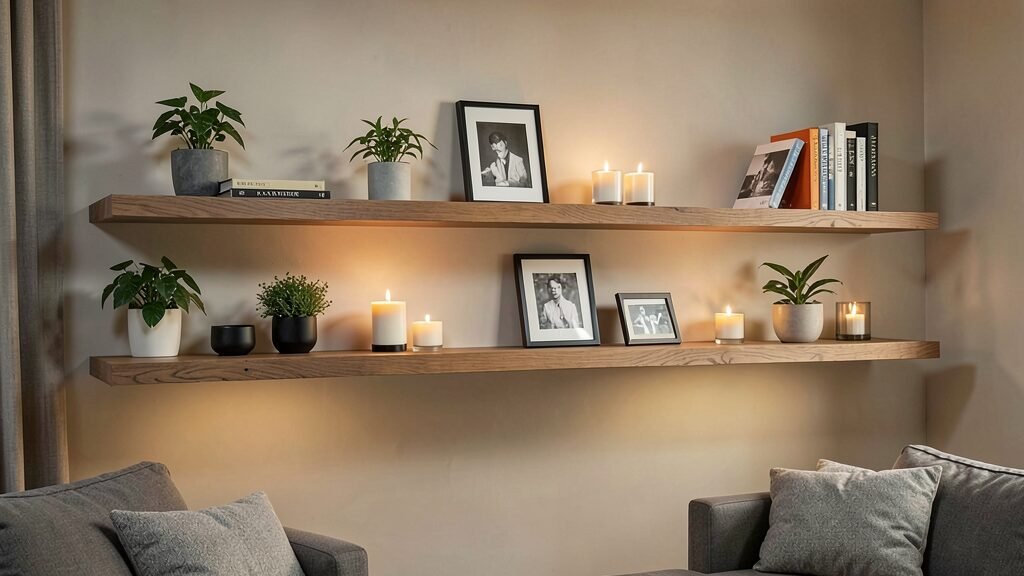
A set of floating shelves on the living room wall creates what is essentially a living, changeable display — one that can be restyled, updated, and refined over time as you acquire new objects, books, and plants. This makes floating shelves one of the most dynamic and personally expressive forms of living room wall decor.
The styling approach for living room floating shelves is the same regardless of the aesthetic you are working toward: vary the heights of objects, group items in odd numbers, mix different types of elements (books, plants, candles, framed photos, decorative objects), and leave deliberate negative space within each grouping. The negative space is what makes the arrangement look curated rather than cluttered.
4. Use Peel-and-Stick Wallpaper on an Accent Wall
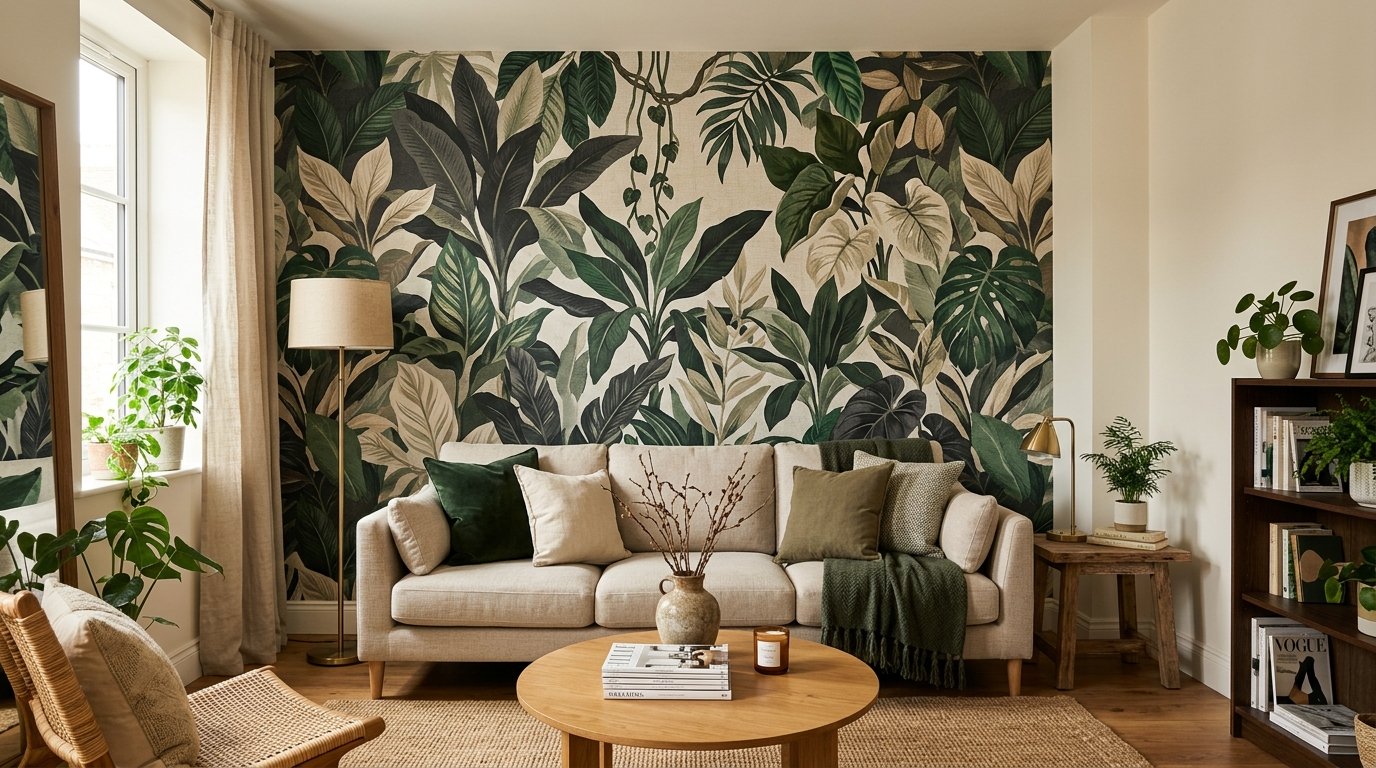
An accent wall in a bold or beautiful pattern is one of the most dramatic and high-impact living room wall decor transformations available — and with peel-and-stick wallpaper, it is also renter-friendly, reversible, and surprisingly affordable.
The wall behind the sofa is the classic living room accent wall placement. Choose a pattern that complements your existing furniture and color palette: a large-scale botanical print, a classic geometric, a moody dark pattern, or a textured material-look design like grasscloth or linen. Even a single wall in a striking pattern changes the entire character of the room.
5. Layer Different Types of Wall Decor
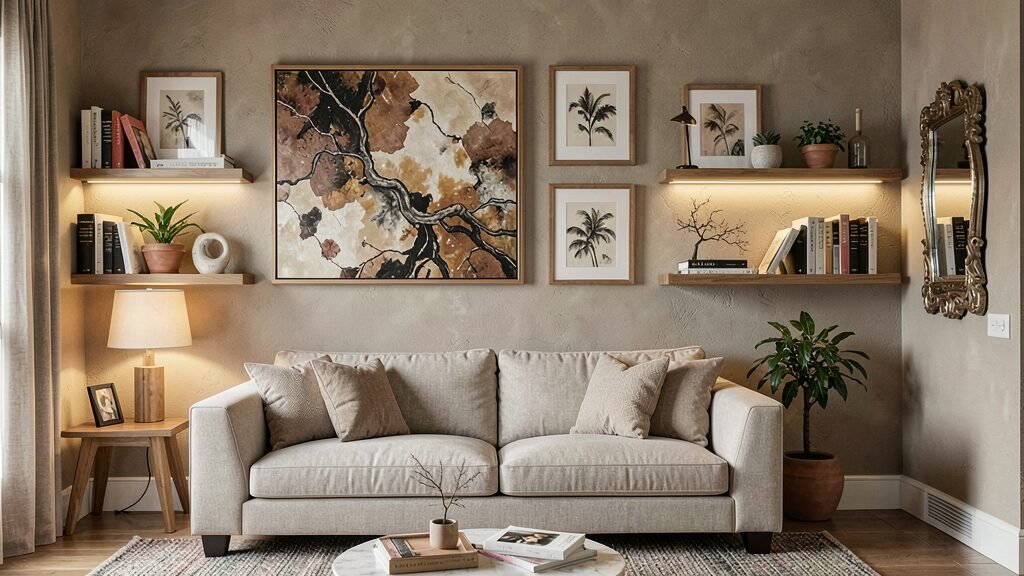
The living rooms that look most professionally designed almost never rely on just one type of wall decor. They layer different elements — a large piece of art above the sofa, flanked by a pair of smaller prints, with a floating shelf below holding books and plants, and a decorative mirror on the adjacent wall — to create a rich, multidimensional visual environment.
Think of your living room walls the way a fashion stylist thinks about an outfit: the large art piece is the main garment, the shelving is the layering piece, the mirror is the statement accessory, and the smaller decorative details are the finishing touches. Each layer adds something the others cannot, and together they create something more interesting and complete than any single element could achieve alone.
6. Hang a Tapestry or Oversized Textile
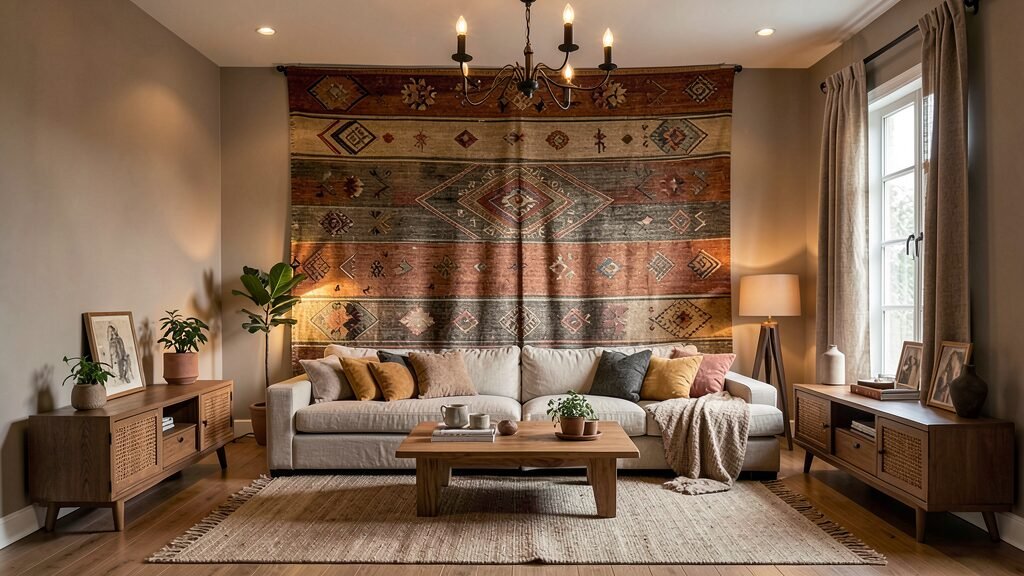
For living rooms that feel cold, acoustically harsh, or simply lacking in warmth and texture, a large textile wall hanging is one of the most effective solutions available. A Moroccan kilim rug hung on the wall, a large woven tapestry, a macramé panel, or a beautifully patterned fabric panel all add visual texture and physical warmth that no framed print can replicate.
Large textiles work especially well in rooms with high ceilings or oversized walls that would require an unrealistically large piece of art to fill adequately. A tapestry hung floor to ceiling on a tall wall creates drama and scale without the expense of commissioning custom artwork.
7. Create Architectural Interest with Wood Paneling
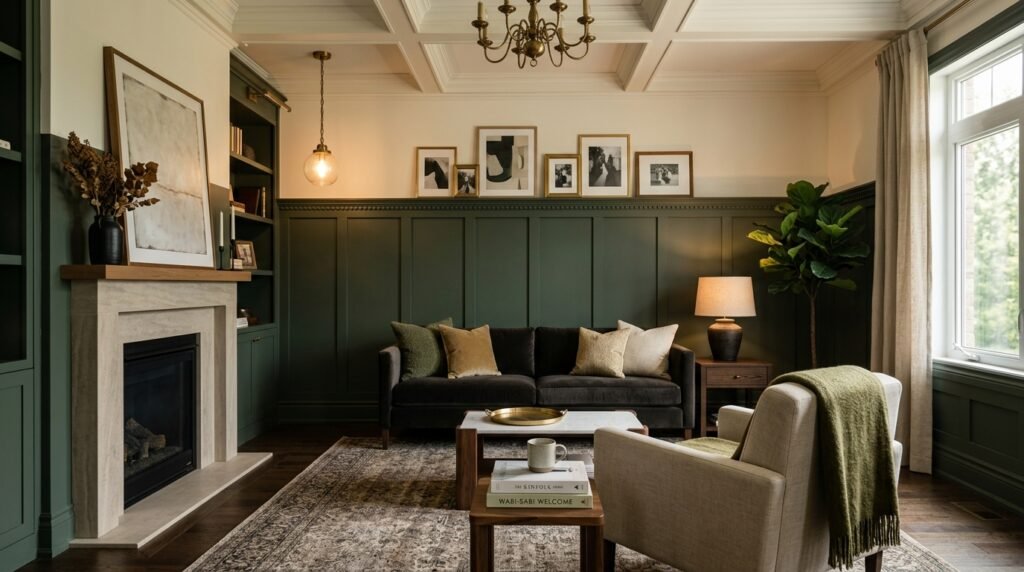
Decorative wood paneling — whether full shiplap, board and batten wainscoting, or framed molding panels applied to a flat wall — adds architectural character and a sense of quality to a living room that no amount of art or accessories can fully replicate. It changes the fundamental nature of the wall, transforming it from a flat background into a textured, dimensional surface.
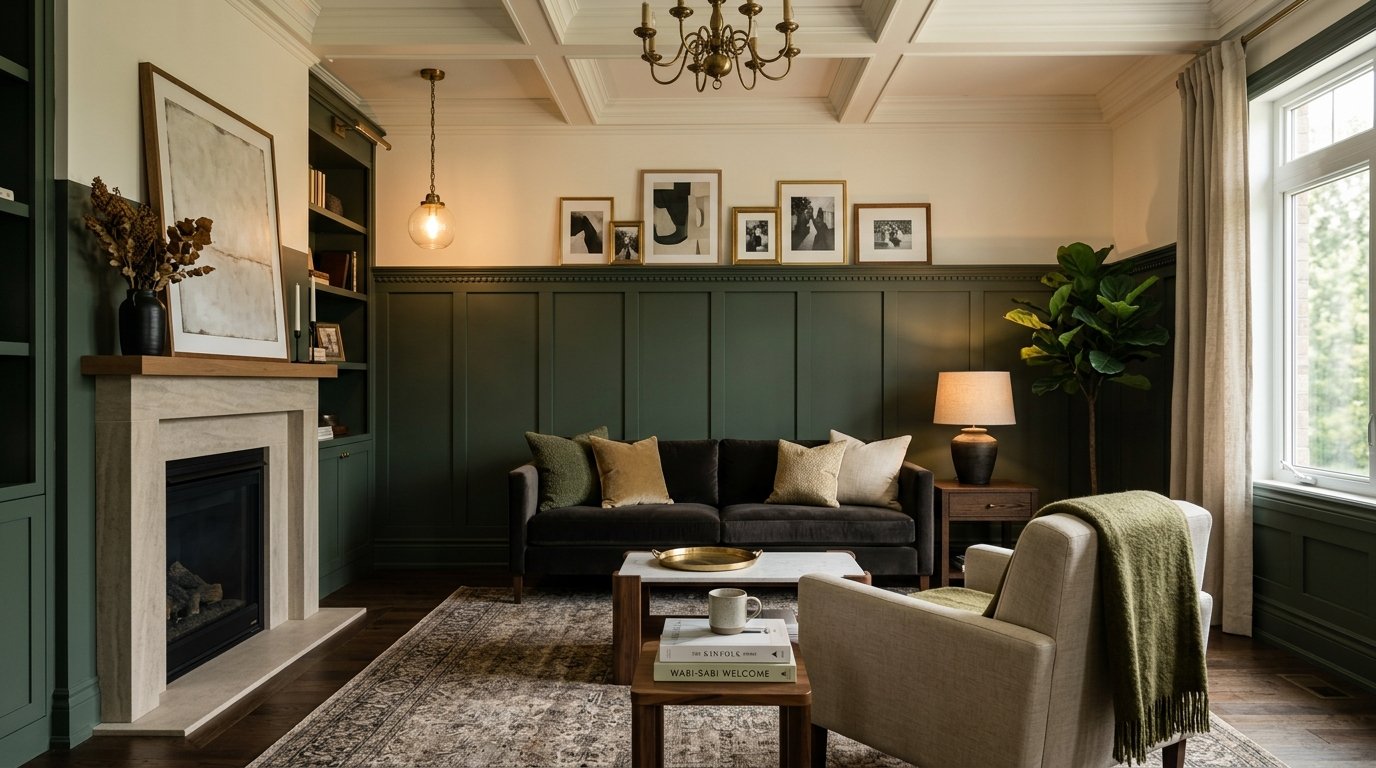
Board and batten paneling on the lower half of a living room wall, painted in a deep, rich color below and a lighter complementary tone above, is one of the most impactful wall decor transformations available. The technique requires basic DIY skills and modest materials, but the result looks like a high-end custom finish.
8. Display a Collection as a Curated Wall Installation
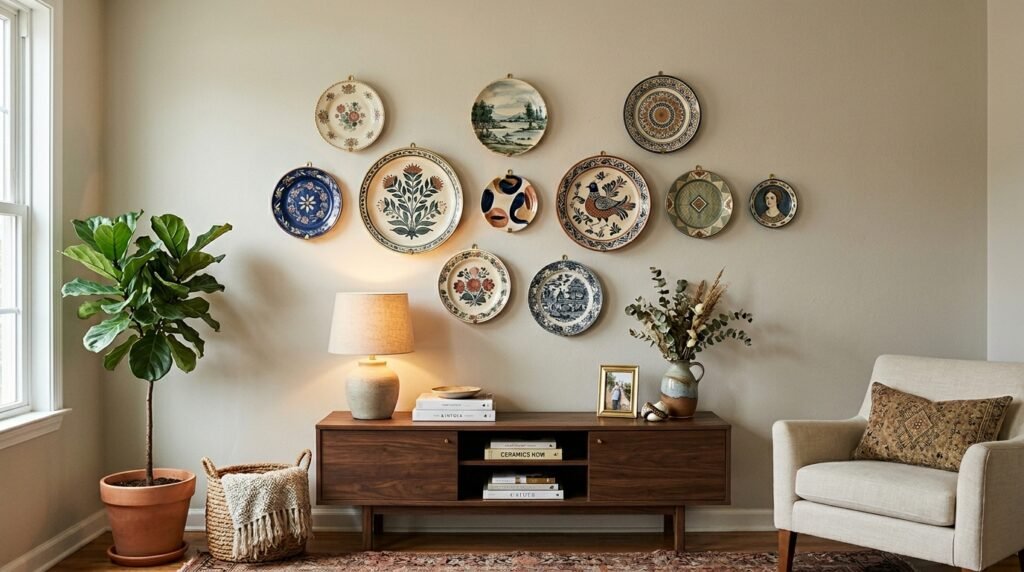
Collections — of clocks, plates, framed botanicals, vintage mirrors, ceramic wall hangings, shadow boxes, or any other objects that share a visual language — make compelling living room wall decor when arranged with intention and confidence.
The arrangement principles are the same as for gallery walls: plan on the floor first, maintain consistent spacing, find a unifying thread across all pieces, and vary scale within the grouping. A collection of nine vintage ceramic plates in varying sizes arranged in an organic cluster above a console; a grid of twelve matching botanical prints in identical frames; a grouping of five decorative mirrors in contrasting shapes — each creates a living room wall installation that is distinctive, personal, and impossible to replicate.
9. Lean Oversized Art for an Editorial Look
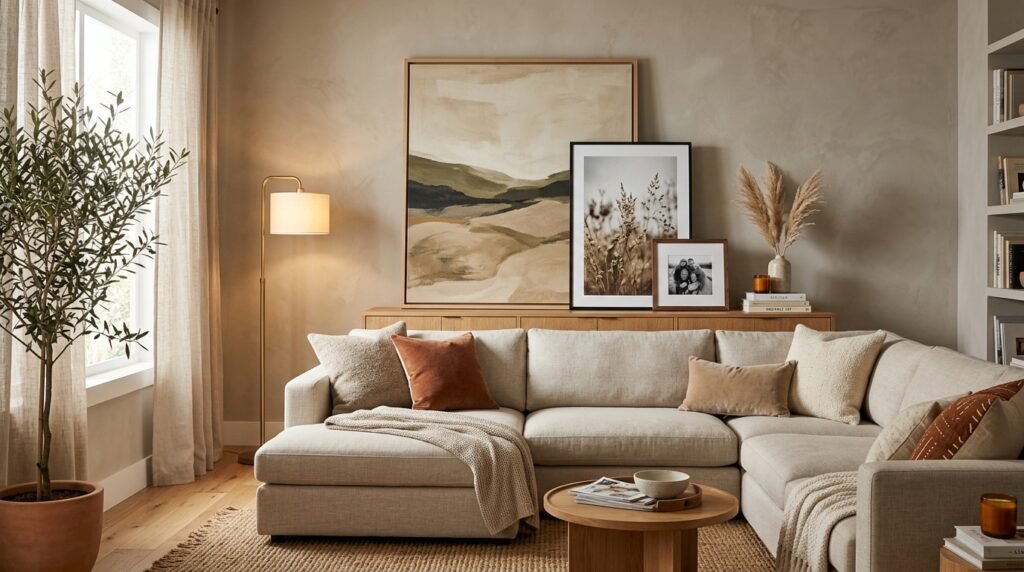
Not all living room wall decor needs to be hung. Leaning large pieces of art, framed posters, or decorative mirrors against the wall — particularly behind a sofa or console table — creates a casual, editorial look that feels current and effortlessly stylish.
Layer leaned pieces in front of each other — a large canvas behind a medium print, with a small framed photo in front — to create depth and a collected quality that hung art alone rarely achieves. This approach is also completely renter-friendly and makes rearranging and updating your wall decor easy and damage-free.
10. Paint a Bold Accent Color or Geometric Pattern
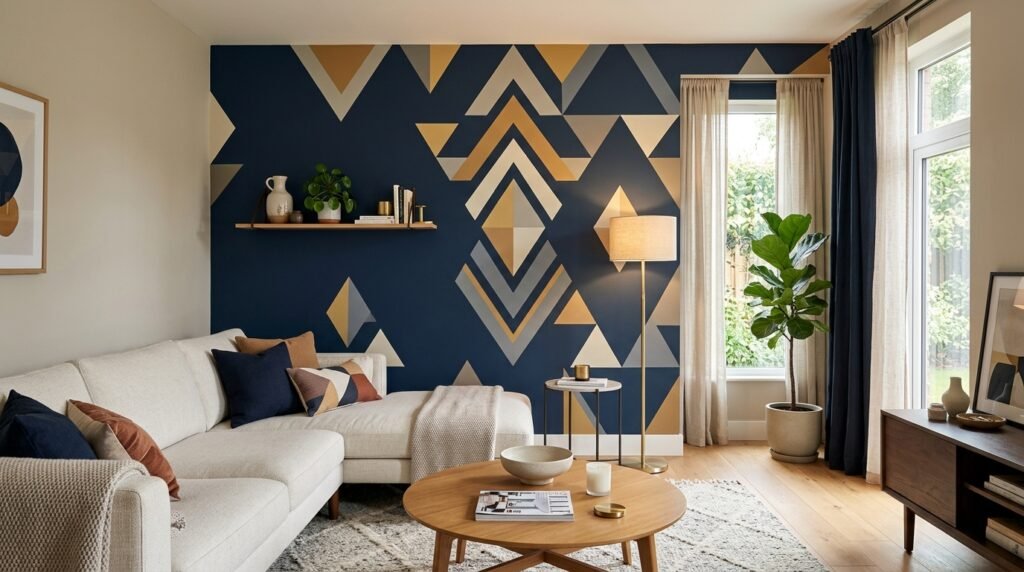
Paint is the most affordable and most transformative living room wall decor tool available. A single accent wall in a deep, rich color — forest green, terracotta, navy, plum, or charcoal — creates a dramatically different atmosphere in the room without the commitment of painting every wall.
For those with more confidence and creative ambition, geometric paint effects — using painter’s tape to create crisp triangles, diamonds, arches, or abstract shapes — turn the wall itself into a piece of art. This requires only paint and tape, costs very little, and produces results that look custom and intentional.
Living Room Wall Decor Styling Principles
Having the right ideas is only part of the equation. Knowing how to implement them well — how to arrange, scale, and execute living room wall decor decisions — is what separates a wall that looks designed from one that looks accidental.
Scale matters more than anything else. The most common mistake in living room wall decor is choosing pieces that are too small for the wall they occupy. A single small print on a large sofa wall looks timid and out of place. When in doubt, go larger. A piece that feels almost too big in the store will almost always look exactly right on the wall.
Center at eye level. The center of any wall display — whether a single piece or a gallery arrangement — should sit at approximately 57 to 60 inches from the floor. This is average human eye level and the standard used by galleries and museums. Many people hang art too high, which disconnects it from the furniture below and makes the room feel disjointed.
Relate wall decor to the furniture beneath it. Living room wall decor should feel connected to the furniture it hangs above. Art above a sofa should be roughly two-thirds the width of the sofa. Shelving above a console should not extend significantly beyond its edges. The relationship between the wall and the furniture creates visual coherence.
Leave breathing room. Wall decor should not cover every available inch of wall surface. Negative space — areas of bare wall deliberately left empty — gives the eye places to rest and makes the pieces that are displayed feel more considered and important. A single large piece of art on an otherwise bare wall can be more impactful than a wall covered edge to edge with smaller pieces.
Edit before you add. Before adding any new living room wall decor, assess what is already there. Remove anything that does not genuinely earn its place — dated prints, mismatched frames, items that felt right once but no longer do. A clean slate is always a better starting point than a crowded one.
Living Room Wall Decor for Every Style
Different interior styles call for different wall decor approaches, but the underlying principles remain consistent across all of them.
Modern and minimalist living rooms benefit from a single large-scale artwork, a statement mirror, or one perfectly styled floating shelf. The emphasis is on quality over quantity, with generous negative space around every element.
Bohemian and eclectic living rooms embrace layering, mixing, and maximal approaches — gallery walls with mismatched frames, large textile hangings, collections of decorative plates, and abundant plants all feel at home in this aesthetic.
Scandinavian and Nordic living rooms favor warm natural materials — wood shelving, rattan mirrors, linen wall hangings — combined with simple, unframed prints in muted, earthy tones. Cozy and considered, never cluttered.
Traditional and classic living rooms suit framed oil paintings or high-quality art prints in ornate or warm-toned frames, decorative mirrors with detailed surrounds, and architectural wall treatments like paneling and molding.
Industrial and urban living rooms embrace exposed brick (or brick-effect wallpaper), raw metal shelving, large-format photography, and graphic, typographic wall art.
Final Thoughts
Living room wall decor is not a problem to be solved once and forgotten. It is an ongoing expression of who you are, what you love, and how your taste evolves over time. The walls of a living room are one of the most personal canvases in the home — and treating them as such, with genuine care and creative attention, is what transforms a house into a home.
Start with one wall. Decide what you want it to feel like. Choose elements that reflect your actual aesthetic rather than a generic ideal. Arrange them with intention, scale them correctly, and edit without mercy. Then stand back, live with it for a few days, and adjust.
Beautiful living room wall decor is not the result of getting everything right on the first attempt. It is the result of caring enough to keep trying until it feels exactly right. And when it does — when you walk into your living room and the walls feel as considered and complete as the rest of the space — the difference is unmistakable.